With the impersonation feature, you can allow users or user groups to act on behalf of other users or user groups and see the website through their eyes. A scenario where impersonation can be beneficial is in sales-assisted selling, as you can assist customers with complex orders or place orders on their behalf when a sales rep has impersonation access.
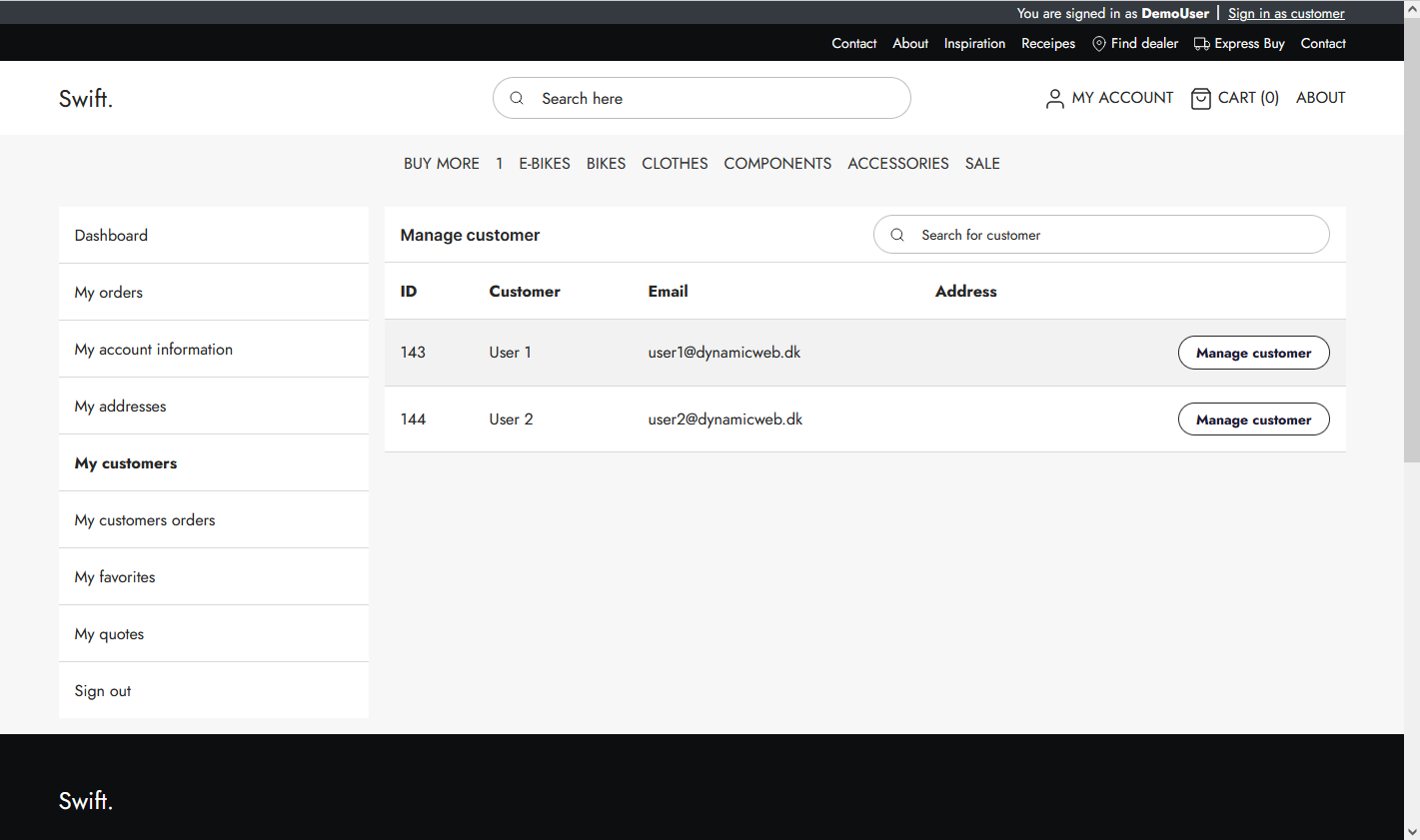
When a user with impersonation access logs in to the frontend with their regular extranet login, they can select a user to impersonate, here as implemented in Swift:
Impersonation relations
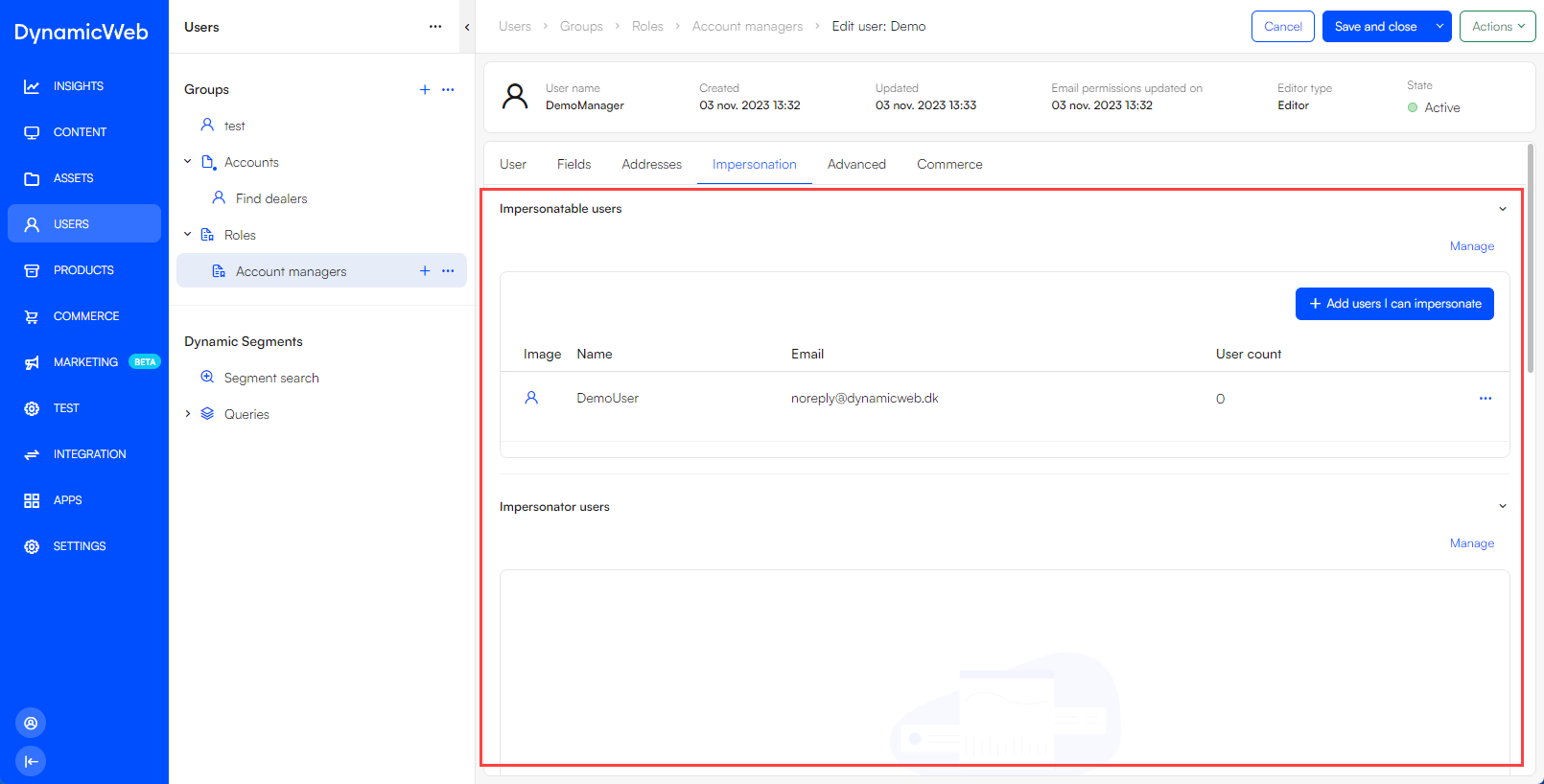
Impersonation relations are set up on the individual user, either manually or via an integration. If set up manually, you can do it from the Impersonation-tab when editing a user, as well as from the action-menu on the user overview screen.
Here you can select:
- The users and groups the selected user can impersonate
- The users and groups that can impersonate the selected user
If a group is selected, all users in that group can impersonate or be impersonated by the user.
When a user has impersonation relations, they can be viewed by clicking the action menu and selecting one of the impersonation options. From there, you can also create new impersonation relations.