The Data models node is where you create data models for a solution - if you're not familiar with the concept of data models you can read about data modeling here.
Creating a data model
Data models are created in a group-like structure under one or more data structures.
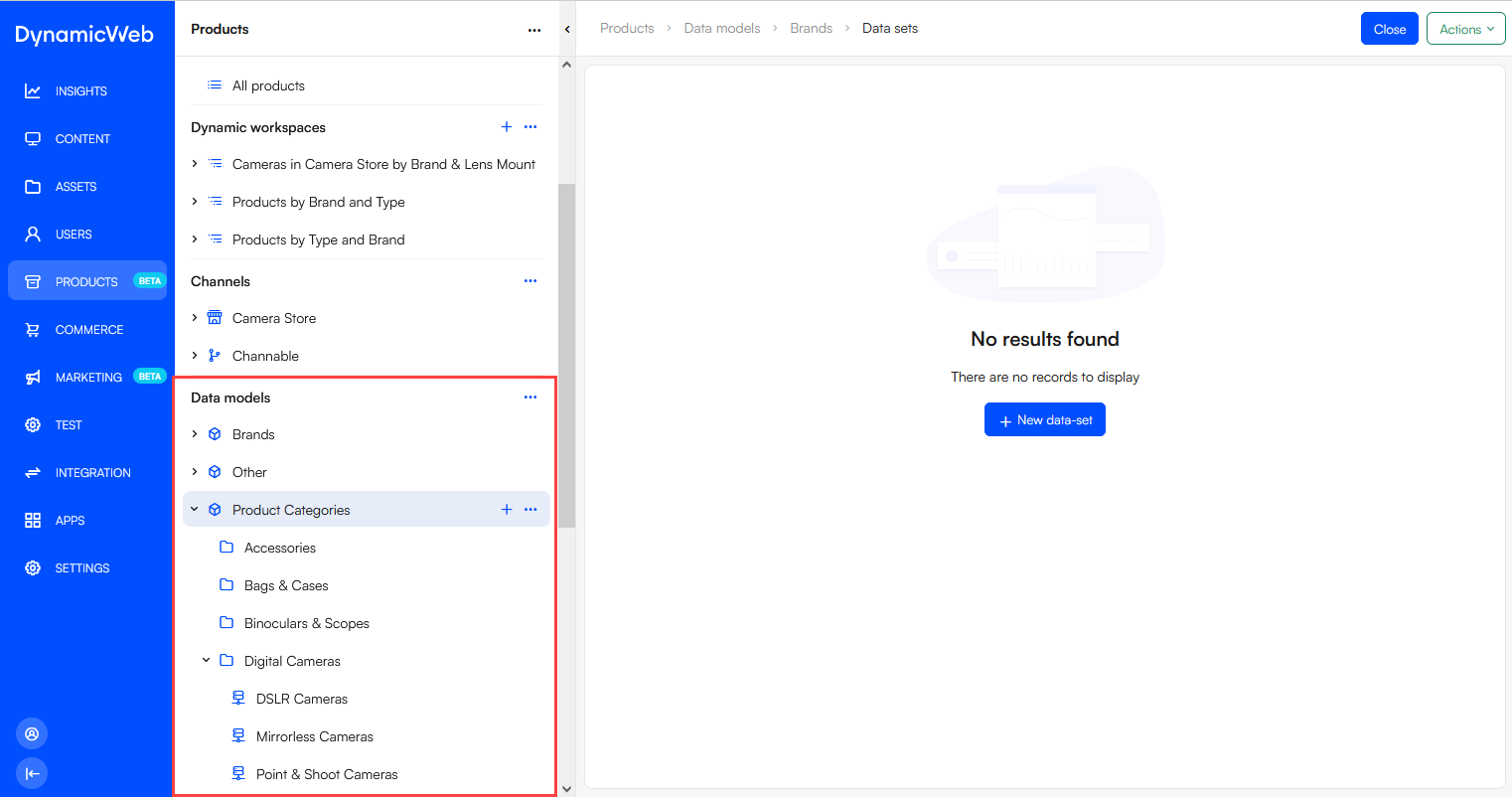 To create a new data model folder or data model:
- Open the context menu for the node/folder
- Click Add data model or Add data model folder
- Fill in the details:
- Name
- Number
- Icon (data model only)
- Save
Attributes
After saving, you can reopen the folder or model and switch to the Attributes-tab.
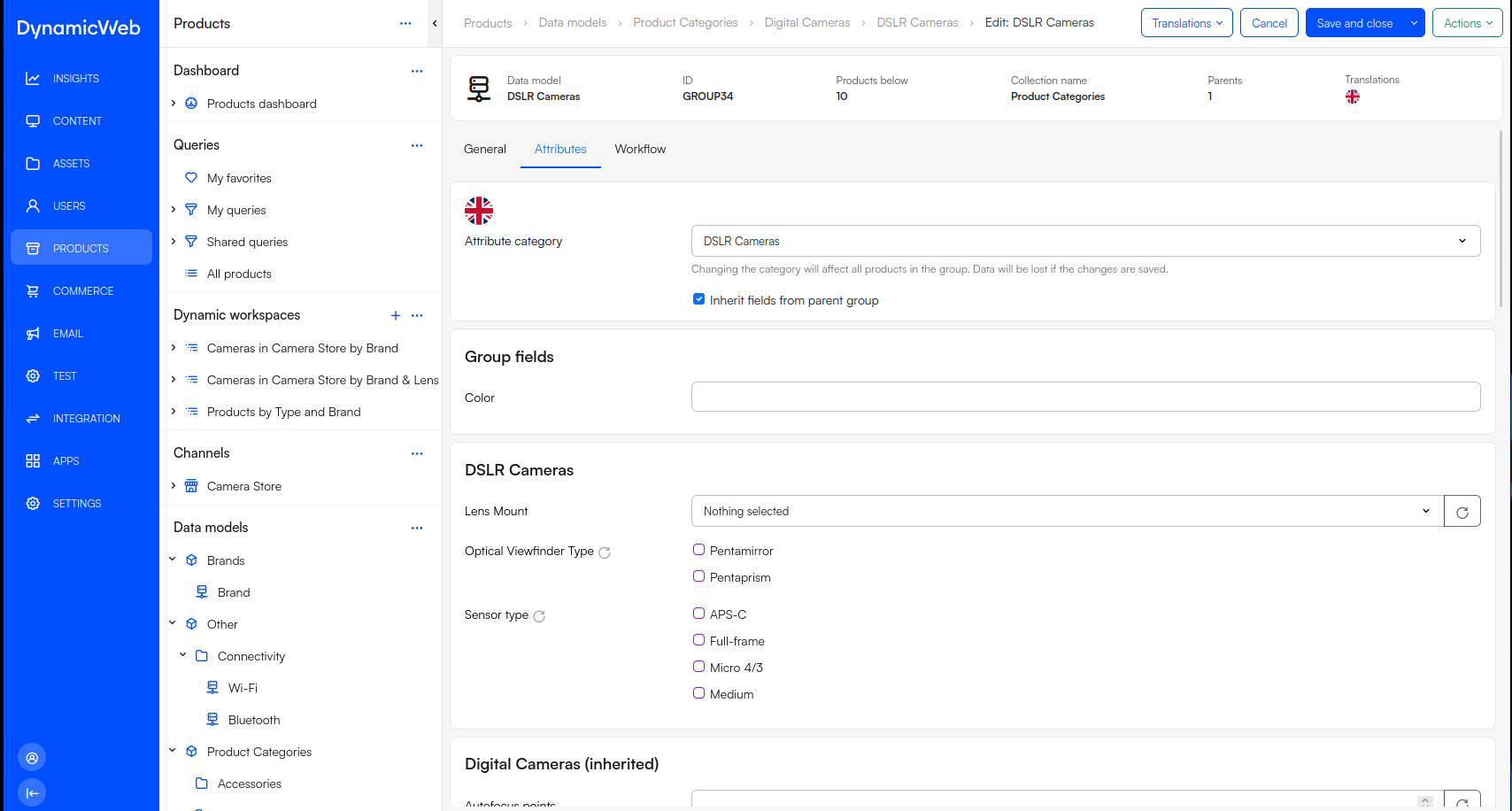 This is the heart of the data model where you define which fields will be present on products which are added to this model.
You do this by associating a category group with the data model:
- Select a category group to inherit fields from
- Optionally check Inherit fields from parent group
- Save
Whether or not you want to inherit fields from the parent group depends entirely on the data structure you're building and if it's hierarchal.
Once you have saved, the fields from the selected category group and any fields inherited from the parent group are available. Any selection you make here or any value you fill out will be used as default values for new products created in the context of this data model, e.g. inside a dynamic workspace based on the data model.
Workflow
The Workflow-tab is used to set up productivity-related features such as workflows and completion rules:
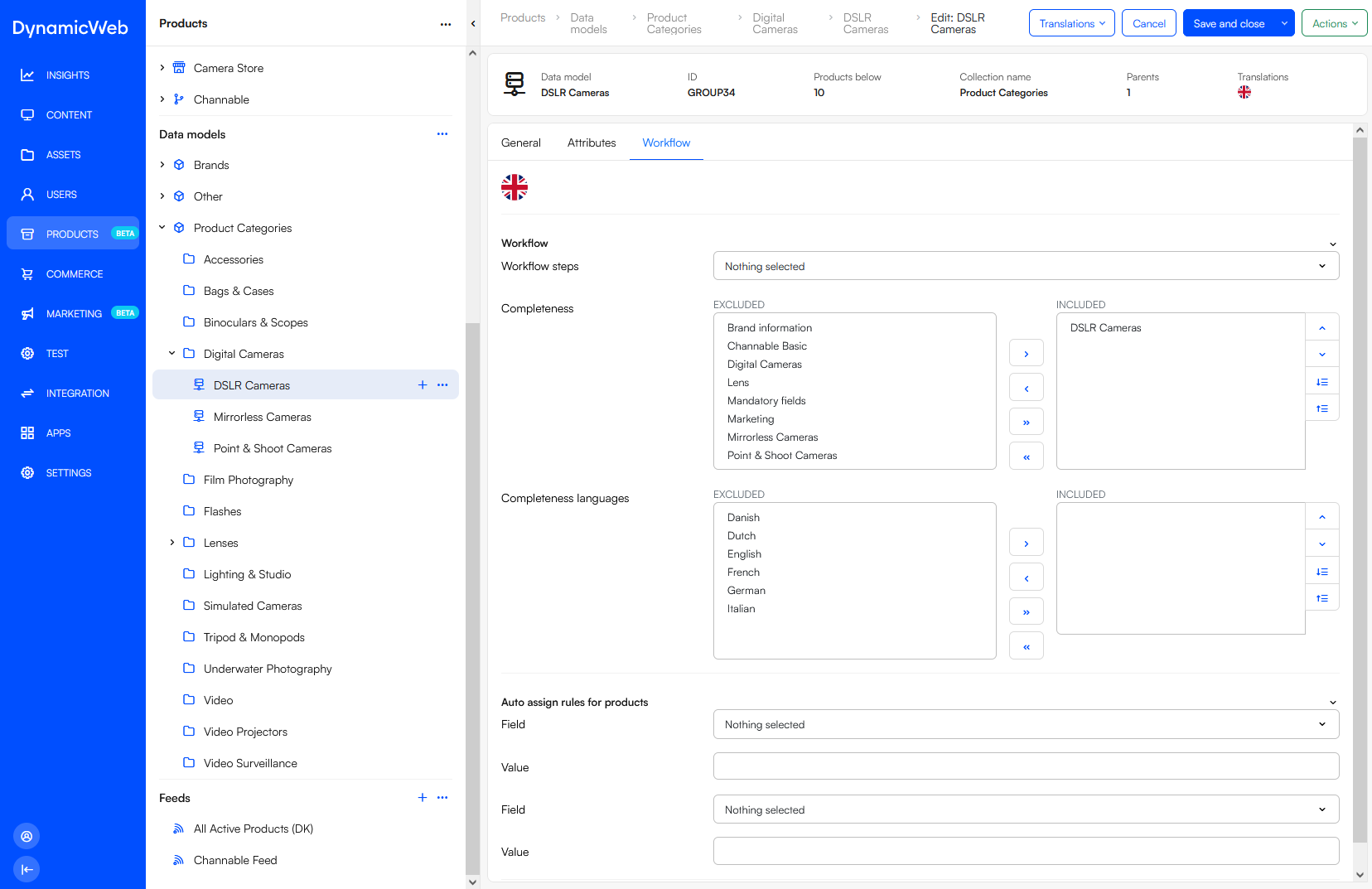 You can:
- Select a workflow which products related to this model should have access to
- Select any number of completion rules associated with this data model. The selected completion rules can be inherited by dynamic workspaces based on this data model
- Select any number of ecommerce languages to use in completeness calculations. The languages selected here will be merged with the languages selected on the query, but you typically only want to have your data models exist in the default language
The auto-assign rules for products-section is used in conjunction with the auto-assign products to group-feature.
Working with data models
Once a data model has been created, you can navigate the group structure and click on any data model to see an overview screen with list of products assigned to the model:
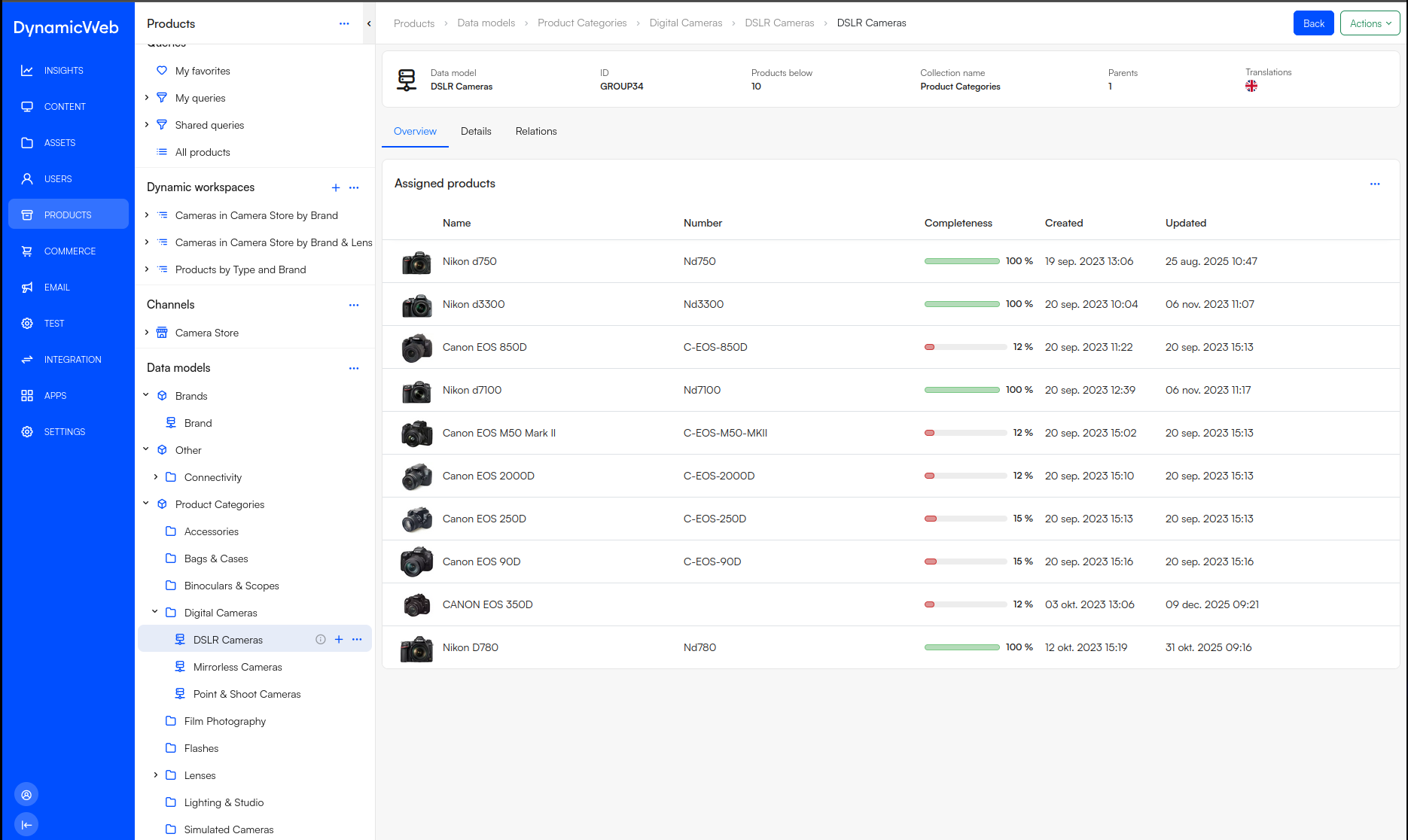 Click on any of these to open the product overview, or use the context menu for the list to Manage and e.g. assign some of the products to another data model.
You can also switch to the Details and Relations tabs to see more information about which attributes are present on this model, default related products, etc.
Data Sets
A data set is a preconfigured instance of a data model, here different brands:
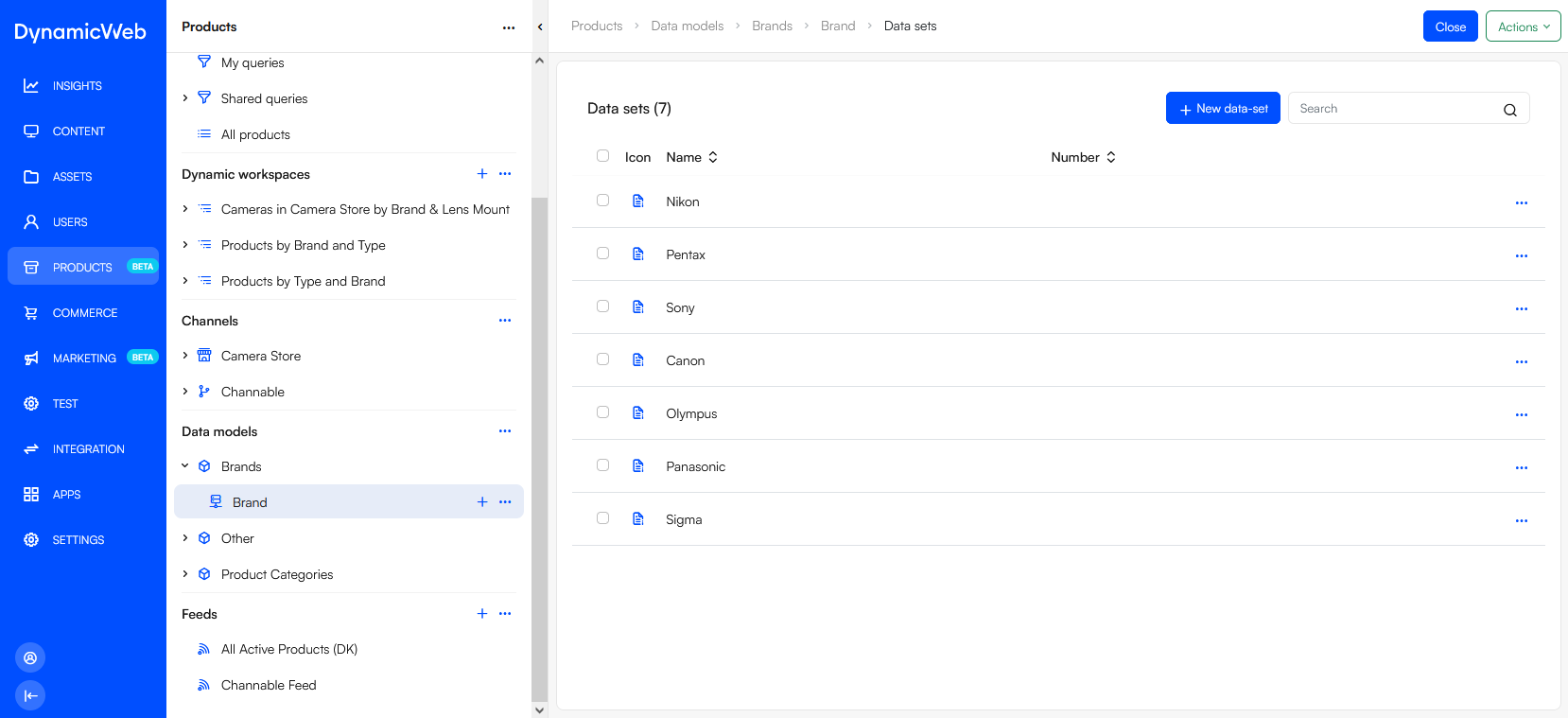 For example, if you have a data model for electric bike center engines a dataset could be a concrete engine model, like a Shimano EP600. You'd create a data set called Shimano EP600 and fill out all the attributes for that data model with data about this engine.
As another example, here is a data set for a Brand-data model:
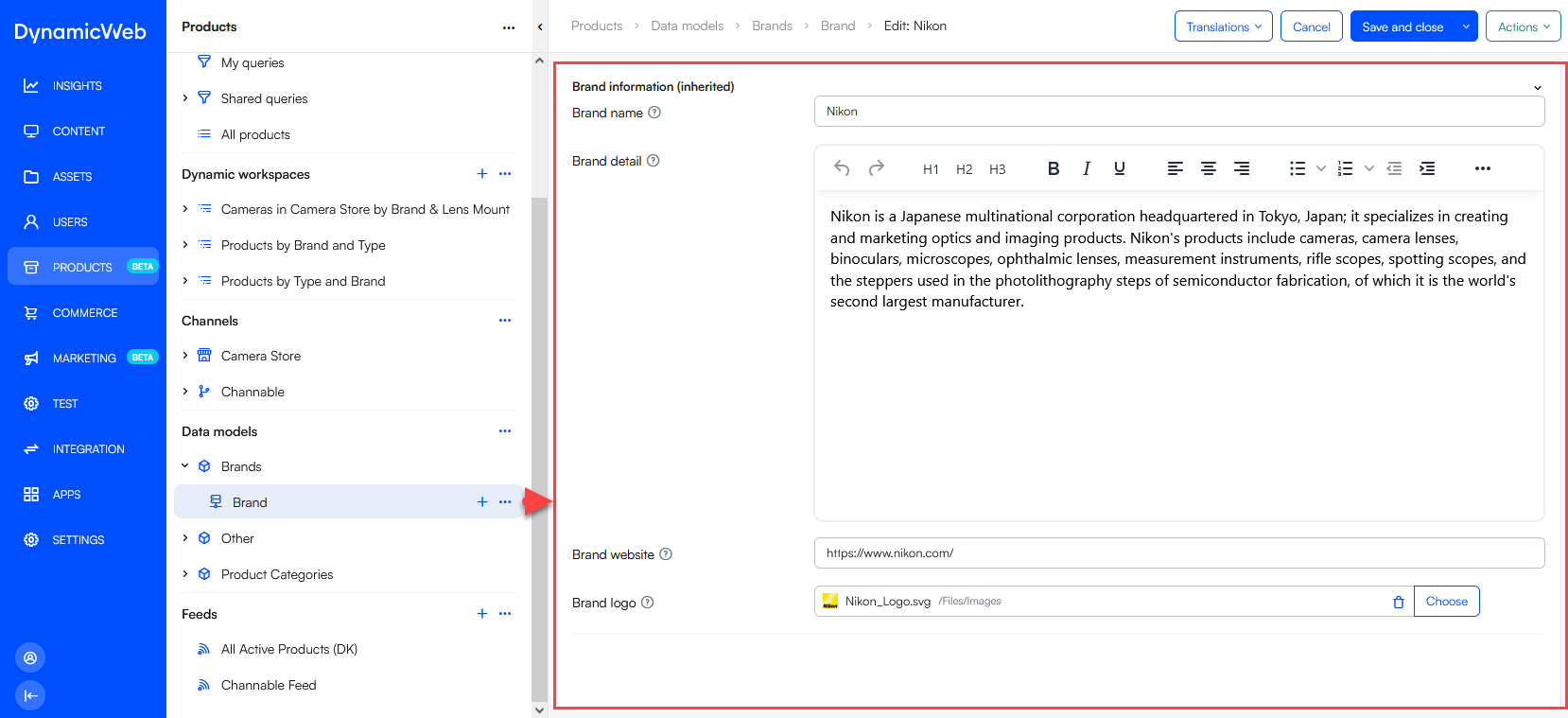 Later on, when you add products using this engine, you can relate them to a data model & then a data set, saving you the effort to fill out the attributes every time.
To create a data set:
- Use the data models tree to navigate to a data model
- Click New data set
- Add a Name
- Save
Reopen the data model and fill add values to the data model properties - then save again. You can now select this data set when managing products.