The Users-area contains our built-in toolset for working with user accounts in DynamicWeb 10, both backend accounts like an Administrator or a Commerce manager account, and frontend accounts belonging to staff or customers.
Like other areas of DynamicWeb 10, the Users-area features a dashboard, an area tree where you select user groups or tools to work with, and a workspace where you work with the selected content such as a user account:
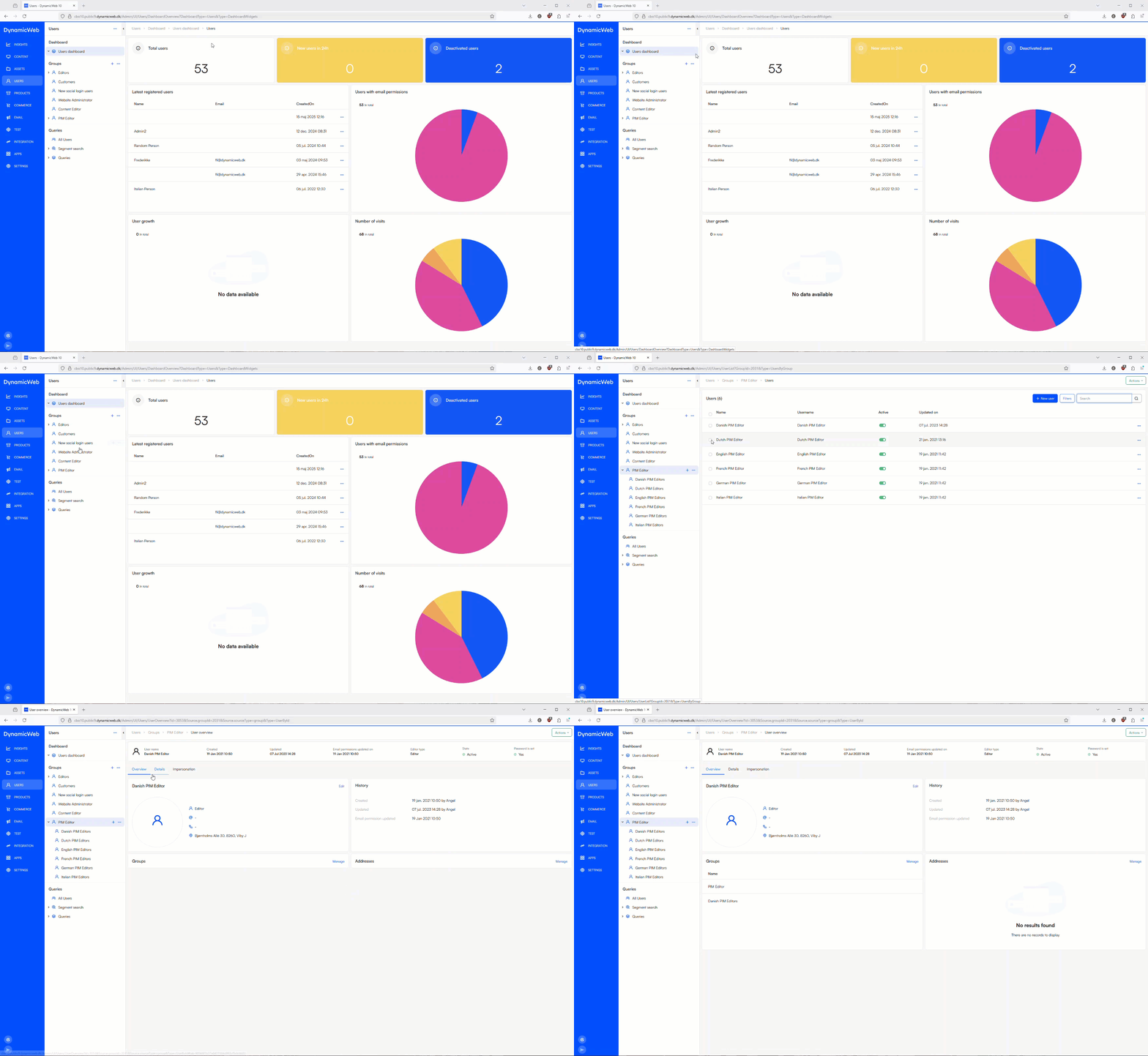
Within DynamicWeb, a user is a registered account with access to a DynamicWeb 10 solution - either a frontend/website, the backend administration, or both. That is to say; some users are direct customers who can log in to websites on the solution, others are editors or administrators who log into the administration interface to create content or handle orders, etc.
How users are created
Users can be created from frontend using the following apps:
- The Extranet and Create User apps can be used to let users create an account directly
- The Shopping Cart app can create users during checkout
- The Forms for Editors app can create users when a form is submitted
Users can also be created directly under a user group, or via integration.
You can read more about users and users types in the user accounts article, and more about user groups and their settings in the user groups article.
Permissions
Permissions are authorizations - rights - given to users, either because they are members of a specific user group, because they have a user type such as Administrator or Admin, or because they have to a user role such as Anonymous users (frontend) or Authenticated users (backend).
Permissions are used to control access to:
- Backend areas and features, e.g. shops under the Products-area
- Frontend content (e.g. pages)
By default, all frontend users have Read-access, and all non-administrator backend users have no explicit permission level set for them. You can then create frontend-content only accessible to logged-in users by changing the default permission for a page to None for the user role Anonymous users (frontend), etc.
Read more in the permissions documentation.
Addresses
A user account features a single default address – and in many cases this is enough – but additional addresses can be created for a user when necessary.
Creating additional addresses can happen in several ways:
- From frontend via an instance of the Extranet app in Manage addresses mode
- From the backend using the built-in Addresses-tab on a user account
- As a part of an integration setup where user accounts and addresses are imported from an external system
From the backend the default address is part of the standard fields under the User-tab you see when editing a user account. Additional addresses, on the other hand, are located under the Addresses-tab, where you can also select a different default address.
Addresses come with standard fields - address, address 2, zip code, city, region, country, etc. Since addresses are often culture-specific, you can create custom address fields if the standard field set is inadequate. They will appear on a fields-tab when editing the address.
Search
In the User section there is a freetext search box in the upper right corner. To reduce overhead the search is performed in a fixed set of columns. These are:
- AccessUserName
- AccessUserUserName
- AccessUserEmail
- AccessUserFirstName
- AccessUserLastName
- AccessUserCustomerNumber